
Photographing Hanksville: Tips and Tricks
If you love photographing dramatic landscapes, unusual geology, dark skies, and places that look like they belong on another planet, Hanksville deserves a spot on your camera roll.
The area around Hanksville is filled with some of Utah’s most distinctive scenery — from the towering silhouette of Factory Butte to the layered colors of the Bentonite Hills and the vast, almost lunar view from Moonscape Overlook. Better yet, many of these landscapes are close enough together that you can photograph several completely different environments in a single trip.
Whether you are traveling with professional camera gear or simply using your phone, a little planning can make a huge difference. Here are some of our favorite tips for photographing the Hanksville area.
Start with the light
The desert changes dramatically depending on the time of day.
Early morning and late afternoon usually provide softer light, longer shadows, and more definition in the landscape. Those shadows are especially helpful around Hanksville, where much of the beauty comes from ridges, badlands, buttes, and layers in the terrain.
Midday light can be harsh, but that does not mean you should put your camera away. Bright overhead light can work beautifully for wide desert scenes, unusual textures, road-trip shots, and the more graphic patterns found in the badlands.
If photography is one of the main reasons for your trip, try to save your most important locations for sunrise, sunset, or golden hour.
Watch the weather before heading out
Some of Hanksville’s most photogenic areas are reached by unpaved roads, and the same clay that creates beautiful badland scenery can become extremely difficult to drive on when wet.
The Bureau of Land Management specifically warns that many roads near Moonscape Overlook are clay-based and can quickly become impassable after rain or snow. Cell service can also be limited, so downloading maps before leaving Hanksville is a smart idea. (Bureau of Land Management)
Always check the forecast before heading into remote areas, and if recent rain has made road conditions questionable, choose another location rather than risking getting stuck.
Photographing Moonscape Overlook
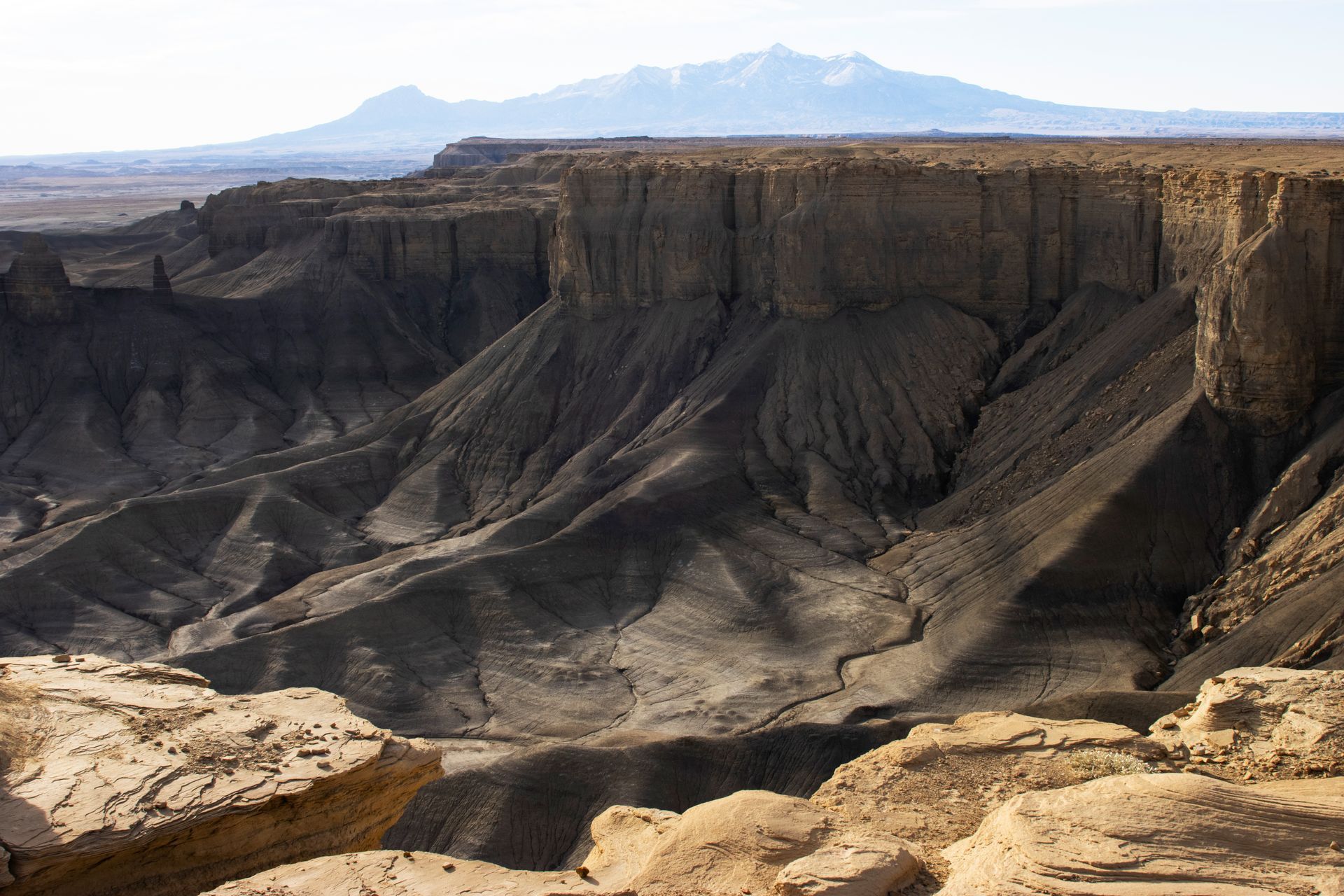
Moonscape Overlook is one of the most recognizable photography locations near Hanksville — and once you arrive, the name makes perfect sense.
From the edge of Skyline Rim, the landscape drops away into miles of deeply eroded hills, ridges, channels, and muted desert colors. The BLM describes the overlook as a popular photography destination overlooking the Lower Blue Hills. (Bureau of Land Management)
Best Light at Moonscape
Moonscape is particularly dramatic when the sun is low enough to create shadows throughout the badlands.
Sunrise can create beautiful soft light across the landscape, while late afternoon and evening can make the ridges and textures much more pronounced.
Because so much of the scene stretches into the distance, changing light can completely transform the photograph. If you arrive early, stay awhile. Some of the best shots may happen as the light moves rather than at the exact moment of sunrise or sunset.
Use Layers to Show Scale
One challenge at Moonscape is communicating just how enormous the landscape feels.
Try including multiple layers in your composition: the rim in the foreground, textured badlands in the middle distance, and distant mesas or mountains behind them.
Another great option is to include a person in the frame. A small silhouette can immediately communicate the scale of the landscape.
Just be extremely careful near the rim. The BLM warns that sandstone can be unstable and visitors should avoid playing or climbing around cliff edges. (Bureau of Land Management)
Bring More Than a Wide-Angle Lens
A wide-angle lens is the obvious choice for Moonscape, but a telephoto lens can create completely different photographs.
Zooming in lets you isolate the folds, ridges, shadows, and repeating patterns in the badlands. Those tighter compositions often create some of the most unusual images from the overlook.
Phone photographers can try both standard and telephoto settings instead of relying entirely on the ultra-wide camera.
Know the Road Before You Go
The BLM recommends a high-clearance vehicle beyond the turn onto BLM Road 0913 on the way to Moonscape Overlook. There are also no facilities at the overlook itself. (Bureau of Land Management)
Bring water, download your maps ahead of time, and never assume an unpaved road will be in the same condition as it was during your last visit.
Photographing the Bentonite Hills
The Bentonite Hills offer an entirely different photography experience.
Instead of enormous sweeping views, much of their appeal comes from color, curves, lines, and texture.
The hills were formed from bentonite clay created from ancient mud and volcanic ash, and minerals within the clay produce layers of brown, red, gray, and green. Visit Utah notes that these colors are often most visible around sunset. (Visit Utah)
Look for Patterns Instead of Landmarks
At the Bentonite Hills, you do not necessarily need one giant focal point.
Look for:
- Curving bands of color.
- Repeating ridgelines.
- Contrasting light and shadow.
- Small valleys running between hills.
- Diagonal lines that lead your eye through the photograph.
This is another location where a telephoto lens can be just as useful as a wide lens. Compressing the hills can make the layers appear even more dramatic.
Sunset Can Bring Out the Color
The Bentonite Hills can look surprisingly subdued during the middle of the day. As the sun gets lower, warmer light can bring out more variation in the landscape.
One important note: many photos of the Bentonite Hills online have been heavily saturated during editing. Visit Utah specifically notes that social-media images often exaggerate the colors. (Visit Utah)
The real landscape is still beautiful — just often softer and more subtle than some photographs suggest.
Protect the Landscape While Getting the Shot
The surface of the Bentonite Hills is extremely fragile.
There are no established trails through the hills, and Visit Utah advises visitors to stay on roads and limit walking to firm areas and wash bottoms because footsteps and tire tracks can damage the clay surface. (Visit Utah)
Sometimes the best photograph is one taken a little farther away with a zoom lens rather than walking onto a fragile slope.
Don't skip Factory Butte
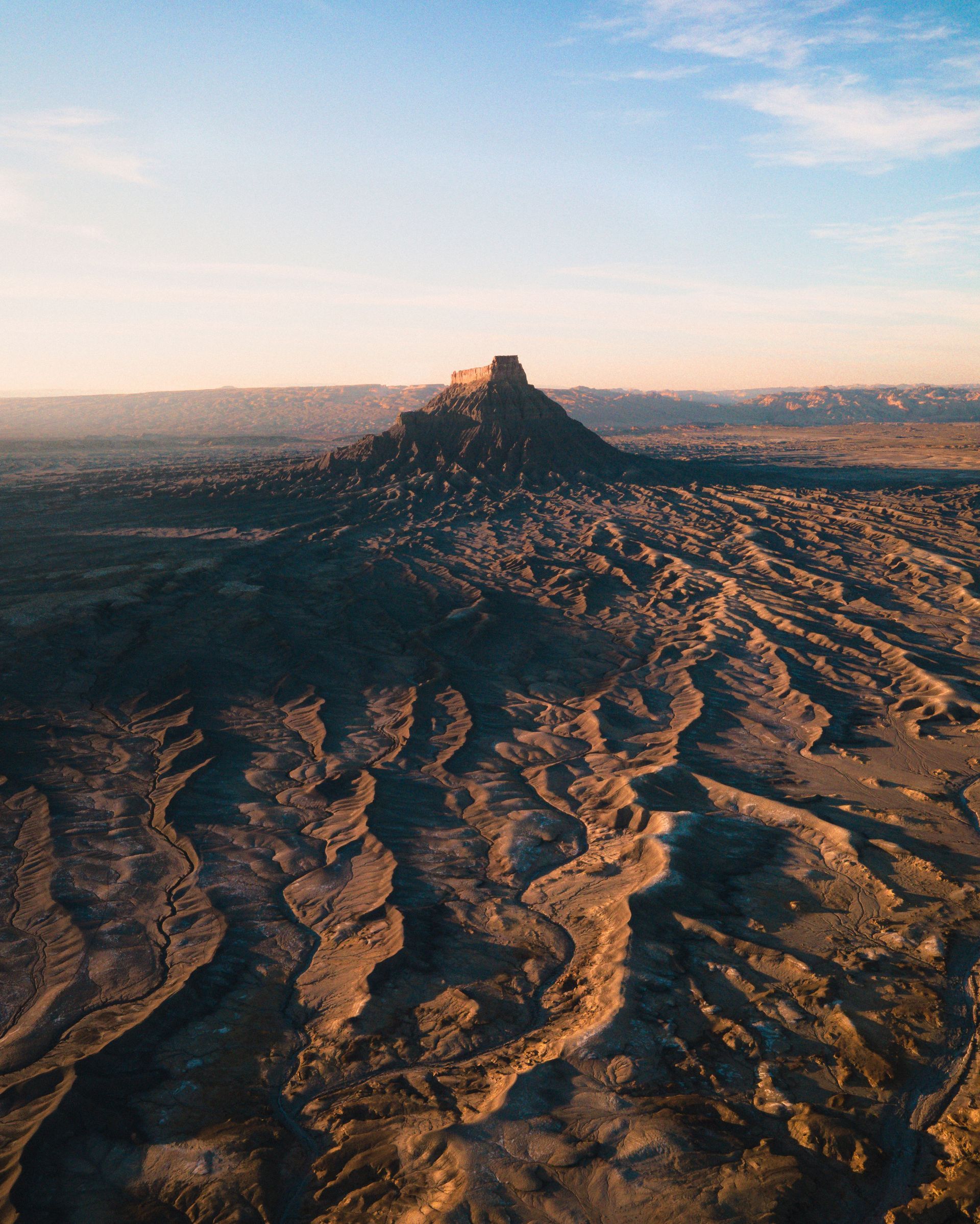
Factory Butte is one of the easiest landmarks around Hanksville to recognize and one of the most versatile to photograph.
The BLM lists photography as one of the popular activities in the Factory Butte Recreation Area. (Bureau of Land Management)
Try photographing the butte from several distances rather than driving straight toward it. A distant view can show the butte rising dramatically above the desert, while a closer perspective reveals the surrounding badlands and textures.
Factory Butte is also excellent for silhouette photography when the sky is colorful.
Use the Roads as Part of Your Composition
Some of the best Hanksville photographs are not taken at an official viewpoint.
Long desert roads can create strong leading lines toward buttes, mountains, and distant mesas.
Pull over only where it is safe and legal, and never stand in the roadway for a photograph. With the right angle, even a simple dirt road disappearing into the desert can tell the story of exploring the Hanksville area.
Photograph the Small Details Too
It is easy to spend your entire trip chasing huge landscapes.
Remember to photograph the details:
- Cracked desert soil.
- Colorful layers of rock.
- Desert plants.
- Textures in sandstone.
- Weathered road signs.
- Your dusty hiking shoes.
- Maps spread across the car.
- A cup of coffee before a sunrise drive.
Those small moments often become some of the photographs that best tell the story of a road trip.
Don't forget the night sky
Once the sun goes down, the photography does not have to stop.
The remote landscape surrounding Hanksville can provide excellent opportunities for night-sky photography. If you are planning to photograph stars or the Milky Way, scout your location during daylight first so you know exactly where you will be standing and how you will safely return afterward.
A tripod, manual camera settings, extra batteries, and a headlamp can all be helpful.
Even if you are shooting with a phone, many newer smartphones have dedicated night modes that can capture surprisingly good star photographs when the phone is stabilized.
A few essentials to bring
For photographers heading into the desert around Hanksville, consider packing:
- Plenty of drinking water
- Offline maps
- A tripod
- Extra batteries
- Extra memory cards
- Lens cloths for dust
- A wide-angle lens for landscapes
- A telephoto lens for details and compressed landscapes
- A headlamp for sunrise, sunset, or night photography
- Sun protection
- Sturdy shoes
Most importantly, tell someone where you are headed if you are exploring remote areas.
Slow down
Perhaps the best photography advice for Hanksville is simply to give yourself time.
The landscape changes constantly with the light.
A place that looks flat and muted at 2:00 in the afternoon may look completely different a few hours later when shadows begin stretching across the hills.
Pull over when something catches your eye. Stay through sunset. Wake up early at least once.
And remember that you do not need professional photography equipment to capture something incredible here. Sometimes the best photo of the trip is simply the moment you looked out across the desert and realized just how strange, enormous, and beautiful this part of Utah really is.
Make Hanksville your photography base camp
With Factory Butte, Moonscape Overlook, the Bentonite Hills, Capitol Reef, Goblin Valley, the Henry Mountains, and miles of incredible desert scenery nearby, Hanksville makes an excellent home base for photography trips.
Staying in town also gives you a place to refuel, recharge batteries, grab food and water, and rest between early mornings and late-night photography sessions.
At Whispering Sands Motel, you are just minutes from some of the area’s most photographed landscapes — making it easy to chase sunrise, return for a break, and head back out again for sunset.
Book your Hanksville stay and start planning your next Southern Utah photography adventure.